


The grammar points need attention of the program of learning English grade 8 – 9th grade

If the 6-7 grade English program is still relatively simple in vocabulary as well as grammar, the 8th grade – 9th curriculum focuses on more grammar points, to improve the knowledge needed. High school education aims to improve knowledge at the secondary level.
Mastering the grammar of the 8th grade – 9th grade, you can be relatively confident with your English grammar because high school English programs only revolve around the ants. This method is more advanced.
Because grade 8-9 programs are systematic and the two programs have a lot of important knowledge, so YOLA will help you synthesize the grammar points of the 8th grade – 9th grade, so you have a look about general knowledge, to find out what they have and what is not, to plan more reasonable learning.
1. Tenses in the 8th grade – 9th grade English program
In grades 6-7 you learned the simple present, the present past, the simple past, the simple future. The 8th grade – 9th graders will have more like present perfect, present perfect continuous, past continuous (past perfect), past perfect (past perfect), past perfect past Perfect).
Once you’ve learned the basics in English, the bottom line is that you have to know how to apply the right things in each case, context. This is not only to understand the theory but also to do exercises to grasp the use cases are different.
2. Modal verbs
The so-called “defective verb” is a verb, but it does not have a central meaning to the sentence but only to the main verb. After verbal verbs, verbs are always verbs.
Modal verbs include:
Can- could- may- might
Must
Should – would
Ought to – had better
3. Reflective pronoun
Reflexive pronouns are used to emphasize action by the subject of action.
Reflexive pronouns include: myself, ourselves, themselves, himself, himself, itself.
4. Reported speech
Narration is a sentence used to narrate or repeat one’s speech to another. This is an important grammar point of the program and will meet again in the English class 10-11-12.
5. Gerund
In the grammatical rules of English, two verbs can not stand side by side, so in order to enrich the meaning of the sentence in case it is necessary to use the verb, Gerund is used as a form of verb (but is an adjective), created by adding -in to the verb verb.
Verbs that are usually associated with gerund include: love, like, dislike, enjoy, hate, prefer, start, stop, begin, stop, finish, practice, remember.
6. The infinitive with “to”
With the verbs followed by gerund, most often the case is followed by the “to + prototype verb”, the two cases are not much different in terms of semantics, however, should also pay attention to use English really good.
7. Passive voice
Passive sentences are used when we want to emphasize the action in the sentence, the agent causing the action whether it is someone or something. The key to the proper transformation of this sentence is the verb “to be” and the past participle. This is also an important grammar point to master and will meet again in the upper classes.
8. Other patterns in the program
– too / enough
– so … that, such … that
– used to + V
– be used to + V.ing
– so that / to order to
With the Yola Educational Foundation’s Junior Program, students will be taught the knowledge of English in grades 6-7-8, with quality curriculum and effective learning methods. , help you to receive not only English, but also knowledge in the field of culture-society. The stages from low to high are as follows:
– Stage 1: Basic English communication through spoken, written, animated images and video.
– Step 2: Comprehensive 4 language skills development and academic skills development
– Stage 3: Deepen your English skills by developing creative writing skills
– Stage 4: Combining language skills, academic knowledge and critical thinking skills to argue, research, write reports and presentations.
YOLA will be the perfect place to build up your potential, equip you with the solid knowledge of the way to conquer your knowledge.

 30/06/2026
SỰ KIỆN MIỄN PHÍ DÀNH RIÊNG CHO CÁC FOOD LOVERS: Thưởng thức ẩm thực, tự tin giao tiếp tiếng Anh
YOLA Food Fair là sự kiện miễn phí dành cho các bạn yêu thích ẩm thực và mong muốn thực hành tiếng Anh trong một không gian gần gũi, vui vẻ và nhiều trải nghiệm tương tác. Tại sự kiện, học viên có thể mang món ăn yêu thích đến YOLA, cùng bạn bè thưởng […]
 27/01/2026
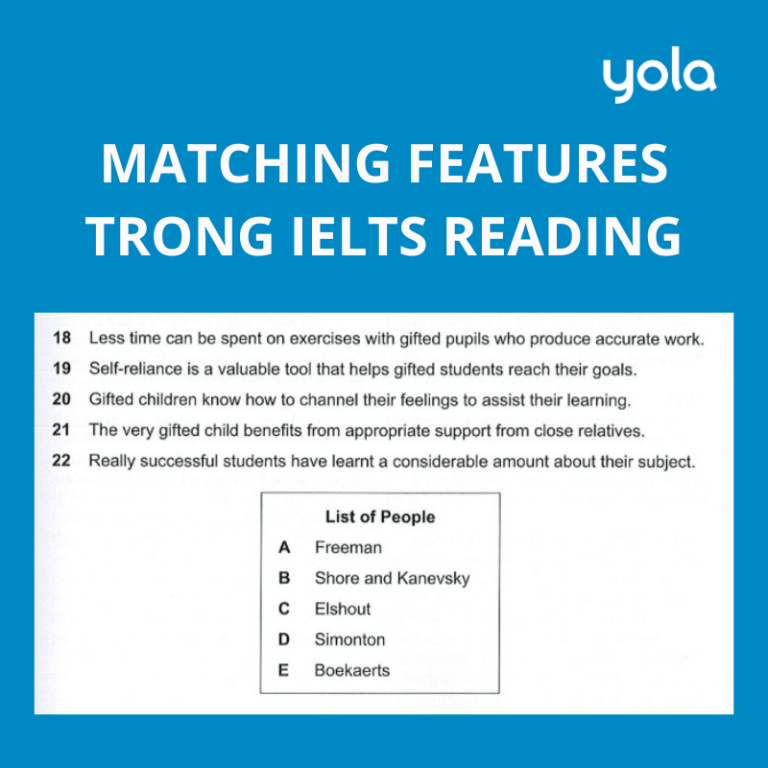
Chi Tiết Cách Làm Matching Features Trong IELTS Reading
Trong các dạng câu hỏi IELTS Reading, Matching Features thường khiến thí sinh “rối não” vì bài đọc xuất hiện quá nhiều tên người, tổ chức, nhóm nghiên cứu hoặc quan điểm cùng lúc. Tuy nhiên, đây lại là dạng ăn điểm nếu bạn hiểu đúng cơ chế ra đề và dùng chiến lược tìm […]
 26/01/2026
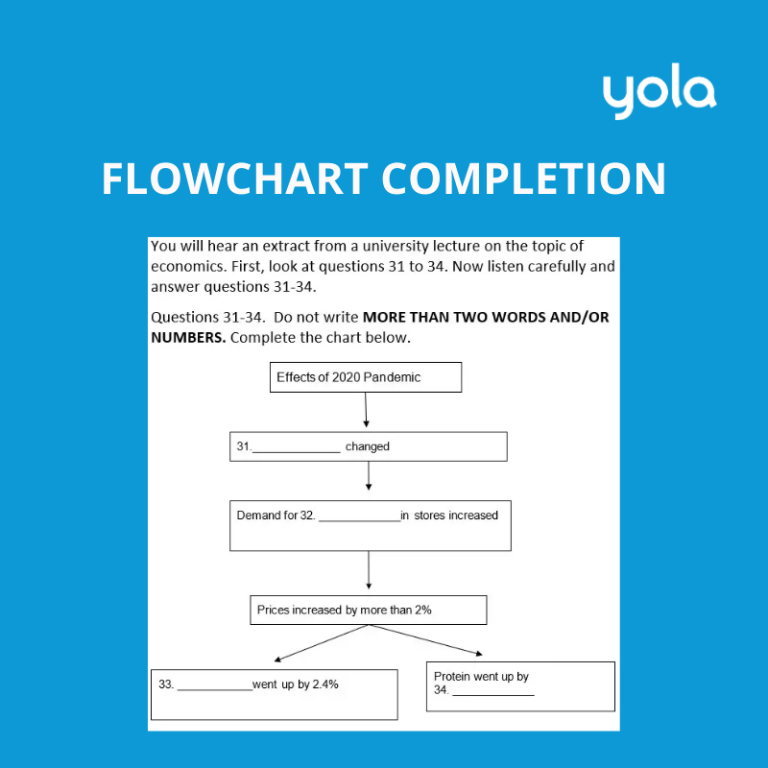
IELTS Reading Flowchart Completion: Chiến thuật làm bài + Tips tăng band
Trong bài thi IELTS Reading, dạng Flowchart Completion thuộc nhóm câu hỏi điền từ vào sơ đồ. Đây là dạng bài yêu cầu thí sinh hoàn thành một biểu đồ mô tả quy trình, chuỗi sự kiện hoặc các bước diễn ra theo thứ tự thời gian hoặc logic bằng cách lấy từ khóa từ […]
 26/01/2026
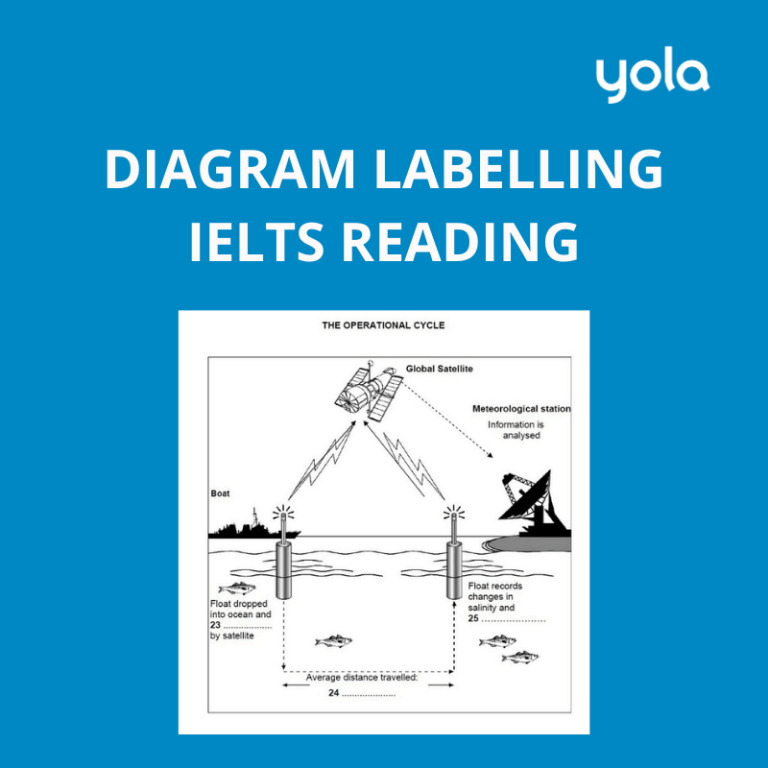
IELTS Reading Diagram Labelling: Cách Làm Chi Tiết & Chiến Lược Hiệu Quả
Trong IELTS Reading, dạng Diagram Labelling thường khiến nhiều thí sinh bối rối vì phải vừa đọc hiểu bài vừa quan sát sơ đồ. Tuy nhiên, chỉ cần nắm đúng chiến thuật, đây lại là dạng bài rất “dễ ăn điểm” vì đáp án luôn xuất hiện rõ ràng trong văn bản, không hề đánh […]